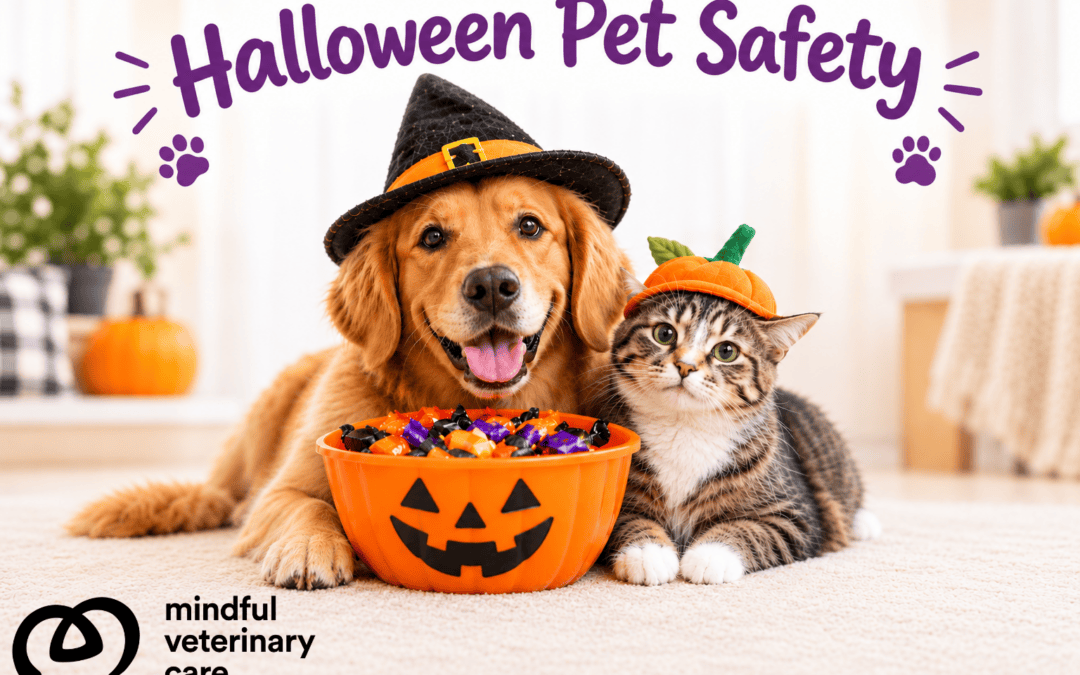
Including your pet in a celebration is a lovely instinct. You want them to enjoy something special with the family, whether that means a treat, a favorite game, or a little extra time together.
For Halloween, our recommendation is simple: keep your pet’s regular diet and familiar treats. A seasonal snack does not have to be new to feel special to your dog or cat.
At Mindful Veterinary Care in Lake Worth, we look at nutrition in the context of the whole patient. Your pet’s medical history, digestion, daily routine, and your family’s goals all help shape our recommendations. That same individualized approach can make holiday decisions easier.
Start With the Pet in Front of You
Before shopping for Halloween treats, consider what already works for your pet. Which foods do they tolerate comfortably? Are they following a prescription diet? Have we discussed a weight-management plan, food sensitivity, or digestive concern?
Even a food generally considered safe can cause vomiting, diarrhea, or discomfort in a pet who is not accustomed to it. Halloween is not the time to experiment with a new food, homemade recipe, or seasonal snack.
Offer a familiar treat in its usual portion and let everyone in the household know the plan. A few extra snacks from several family members can add up without anyone realizing it.
If you would like to explore different treats or a whole-food addition to your pet’s diet, contact us or your primary veterinarian ahead of time. We can discuss whether it fits your pet and how to approach any change thoughtfully, away from the activity of a holiday.
Can Dogs Have Pumpkin for Halloween?
Plain, unsweetened pumpkin may fit some dogs’ feeding plans, but that does not make it a necessary Halloween addition. If your dog has never eaten it, stay with their familiar food and treats rather than introducing it for the occasion.
If pumpkin is already part of a veterinarian-approved routine and your dog tolerates it, follow that existing plan. Plain pumpkin is different from pumpkin pie filling, desserts, and pumpkin-spice products, which may contain added sugar, spices, or other ingredients that are inappropriate for pets.
You do not need a seasonal ingredient to include your dog. Their usual treat, offered during a quiet moment with you, can be just as welcome.
Homemade, Natural, or Store-Bought: Look Beyond the Label
Words such as “natural” or “homemade” do not tell us whether a treat is right for an individual patient. We want to understand its ingredients, portion size, and place in the pet’s overall diet.
Read the full ingredient list, even on a product your family has purchased before. Keep chocolate, grapes, raisins, and products containing xylitol away from dogs. Xylitol may also be identified as birch sugar. Human candy should stay out of reach of both dogs and cats.
A familiar recipe still deserves an ingredient check if someone has made substitutions. Ask visitors to avoid sharing food, and put one person in charge of your pet’s usual treats so portions stay consistent.
Treat selection can also be part of your pet’s dental care. If chewing is uncomfortable or your pet has had dental treatment, ask us which familiar foods and textures fit their care plan.
What About Halloween Treats for Cats?
Cats can enjoy the occasion in their own way. A familiar cat treat, a favorite toy, or a quiet place beside you may be all they want. There is no need to introduce fish or another new food simply because the family is celebrating.
For cats who have previously tolerated fish and whose feeding plan allows it, one of Dr. Block’s favorite occasional whole-food treats is a small portion of plain sardines canned in water with no added salt or seasonings. Sardines provide omega-3 fatty acids and have a flavor many cats enjoy.
Dr. Block’s recommendation refers to canned whole sardines with their soft, edible bones, not raw fish or hard fish bones. Ask our team about an appropriate portion and whether this choice fits your cat’s health needs. It is an occasional treat, not a replacement for a complete and balanced diet.
If sardines are new to your cat, save that nutrition conversation for a planned discussion with your veterinarian rather than trying them for the first time on Halloween. Cats with food sensitivities, medical conditions, or prescribed diets may need a different option.
This is how we approach nutrition: consider the potential value of a food alongside the needs of the animal eating it.
Think About Comfort Along With Food
The doorbell, visitors, and costumes may matter much more to your pet than what is in the treat bowl. A dog who barks or becomes agitated at the front window, or a cat who hides when guests arrive, may need a quieter plan.
Before trick-or-treating begins:
- Set up a comfortable room away from the front door with a familiar bed and water. Include a litter box for cats.
- Place a sign outside asking visitors not to ring the doorbell, or hand out candy away from the entrance.
- Use closed doors or secure barriers to limit access to arriving visitors and reduce escape opportunities.
- Keep meals and walks close to their usual schedule when possible.
- Skip costumes if they cause distress or interfere with movement, vision, hearing, or breathing.
If you anticipate anxiety, contact us or your primary veterinarian well before Halloween. Some pets need more support than a quiet room alone can provide. An individualized plan may include environmental changes, calming prescription medications, or a carefully selected supplement. Planning early gives your veterinarian time to explain its use and, when appropriate, assess your pet’s response beforehand.
Our integrative approach brings conventional medicine and appropriate complementary support into the same conversation. The goal is to choose what fits your pet, with attention to safety and realistic expectations.
If Your Pet Gets Into Something, Ask for Help
Before the holiday, save your veterinarian’s number, the number of a nearby emergency hospital, and these animal poison-control contacts:
- ASPCA Animal Poison Control Center: (888) 426-4435
- Pet Poison Helpline: (855) 764-7661
Both services are available around the clock. Consultation fees may apply.
If you suspect an ingestion, move the remaining food out of reach and contact a veterinary professional promptly. Keep the packaging and share your pet’s approximate weight, what may have been eaten, how much is missing, and when it happened. Mention any missing wrappers, too.
Do not wait for symptoms or induce vomiting unless a veterinary professional directs you to do so. For collapse, seizures, or trouble breathing, seek emergency veterinary care immediately. Routine email and website messages are not appropriate for an urgent poisoning concern.
Frequently Asked Questions
What are healthy holiday treats for dogs?
For Halloween, choose a familiar treat your dog already tolerates and that fits their feeding plan. A food can be healthy for one dog and unsuitable for another. Ask your veterinarian before adding anything new, especially if your dog has a medical condition or prescribed diet.
Can dogs have pumpkin as a Halloween treat?
Some dogs tolerate plain pumpkin, but Halloween is not the time to introduce it. If it is already part of your dog’s approved routine, follow that plan. Avoid pumpkin pie filling, desserts, and seasoned products.
Can cats have sardines as a treat?
For a cat who already tolerates fish, a small portion of plain, no-salt-added sardines canned in water may be an occasional option with veterinary guidance. Dr. Block’s whole-sardine example includes the soft bones in canned sardines. Ask about suitability and portion size, and do not use sardines as a meal replacement.
What should I do if my pet eats something harmful?
Contact your veterinarian, an emergency veterinary hospital, ASPCA Animal Poison Control Center at (888) 426-4435, or Pet Poison Helpline at (855) 764-7661 promptly. Consultation fees may apply. Keep the packaging and do not give a home remedy or induce vomiting without professional instructions.
When should I ask about Halloween anxiety?
Contact your veterinarian well before the holiday if your pet has difficulty with visitors, noise, or changes in routine. Early planning allows time to select support and evaluate your pet’s response when appropriate.
A Healthier, Happier Halloween Starts With Mindful Choices
At Mindful Veterinary Care, thoughtful nutrition and preventive veterinary care are part of supporting your pet throughout the year. We take time to understand your concerns and build recommendations around the patient, using conventional care and appropriate complementary therapies when they serve your pet’s needs.
If you have questions about familiar treats, nutrition, or preparing an anxious pet for Halloween, contact Mindful Veterinary Care in Lake Worth. You can also speak with your primary veterinarian about an individualized plan. You do not need to wait until something goes wrong to ask for help.
Mindful Veterinary Care
8724 Lake Worth Road, Suite 500, Lake Worth, FL 33467
Call or text: (561) 678-8724
Email: info@mindfulveterinary.com
Website: mindfulveterinary.com
Follow us on Facebook and Instagram for nutrition guidance, preventive-care education, and updates from our team.